|
Migration, Media, Modus Vivendi
The world is all mixed up. From a Germany populated by Turks to a de-Zionizing Israel that cannot partition off pluralism any more than Bosnia, the idea of a purely ethnic or religious community has become untenable. Today, we all live in hybrid cultures.
This fact of life is a result of surging migration from the poor lands to fill the labor gap of the shrinking, aging population in the advanced world. And it is a consequence of the global penetration of the mass media which juxtaposes all values to all others.
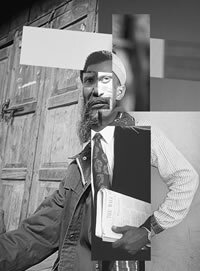
This 21st century collage of often incommensurate ways of life exists not only on a global scale, but within individuals themselves. Rather than organic unities, the society and the person alike have become a coexisting repetoire of identities. Pro-choice Catholics live alongside hi-tech Hindus, gay conservatives and Chinese Victorians. High mixes with low, formal with informal. As the architect and urban theorist Rem Koolhaas notes, "cities today are like the Internet-the background for a plural, fluid culture in which many conditions are simultaneously present."
 In this circumstance, the old notion of a universal liberal order in which the Babelian diversity of the world somehow converges into a rational consensus about the "good" and the good society cannot hold. Beyond the impact of migration and the media, advances in medicine and genetics will further expose the lack of any consensus on the deepest issues of life and death. To some Catholics and Muslims, for example, cloning is an abuse of God's trust. To others, it is mankind's ultimate liberation from the tyranny of nature. In this circumstance, the old notion of a universal liberal order in which the Babelian diversity of the world somehow converges into a rational consensus about the "good" and the good society cannot hold. Beyond the impact of migration and the media, advances in medicine and genetics will further expose the lack of any consensus on the deepest issues of life and death. To some Catholics and Muslims, for example, cloning is an abuse of God's trust. To others, it is mankind's ultimate liberation from the tyranny of nature.
To insist on universality in such a world is to guarantee that civilizations will clash. The alternative is to seek a new "modus vivendi" that brings civil peace to the collage, an order that in some ways may resemble the Middle Ages when different values held in different jurisdictions.
Devising an alternative to the illusion of a universally triumphant liberalism is the most challenging task of political philosophy today. The late Isaiah Berlin (NPQ, vol. 8. no. 4, Fall 1991) started down this path when he revived Giambattista Vico's view that the plurality of cultures was irreducible into an ideal of universality. Now, the British philosopher John Gray takes up where Berlin left off with his notion of a "modus vivendi" tolerance as the key political idea of our time.
Nathan Gardels, editor, NPQ
back to index
|